
Emergency Chimney Sweep Near Me: What North Sacramento Homeowners Should Do First
Most of what people type into a search bar during a chimney scare comes from panic: emergency chimney sweep near me, chimney fire what do I do, smoke coming out of fireplace. The honest answer is that the first fifteen minutes after you suspect something is wrong with your chimney are almost never about sweeping. They’re about a specific sequence of actions, and getting that sequence wrong is what turns a containable event into a house fire or a carbon monoxide incident. If you’re in North Sacramento and you’re not sure whether what you’re seeing is an emergency, call (866) 282-7519. We answer 24/7. Fast dispatch from 7am to 7pm, Sunday through Friday.
First: Know What You’re Actually Looking At
An active chimney fire makes itself known before you see flames shooting out the top. From inside the house, it sounds like a freight train or a low-flying jet that never moves on. There’s a deep roaring or rumbling coming from the flue, often loud enough to hear through closed doors. The stovepipe or chimney breast gets hot to the touch, hotter than it ever gets from normal burning. And there’s a smell: acrid, sharp, like a hot iron left on too long, nothing like the pleasant wood smoke you’re used to. If you’re seeing chunks of creosote raining down into the firebox, or dense black smoke pouring from the chimney cap, that’s not aggressive burning. That’s a flue fire.
Normal fires pop and crackle. A chimney fire roars. If you hear roaring inside your chimney, treat it as an emergency. The same goes for smoke suddenly spilling into the living room when the fire is well-established and the damper is open. Backdrafting in North Sacramento homes is rare but it happens, especially in older houses around Del Paso Heights or Hagginwood where original flues were sized for different conditions than what’s there now.
The Order of Operations When You Suspect an Active Chimney Fire
Here’s the sequence, and the first item on it surprises people:
- Do not open the damper wider. The instinct to “give it air” or “let the smoke out” is wrong. Oxygen feeds the fire. Closing the damper and the fireplace doors chokes it, and starving a chimney fire of oxygen is the single most effective thing you can do before professionals arrive.
- Close the air intake vents on the stove or fireplace. If you have a wood stove, shut the primary and secondary air controls completely. That’s how the fire got its oxygen, and that’s how you cut it off.
- Call 911. A chimney fire can crack a liner and spread into the framing without you seeing it. The fire department will check the attic and the walls with thermal imaging, something no homeowner can do from the living room. That documentation also matters for insurance.
- Evacuate the house. Once the fire department is on the way, get everyone out. Do not stay inside to “keep an eye on it.”
- After the fire department clears the scene, call us. This is the point where a chimney sweep actually enters the equation. A post-fire inspection has to happen before the fireplace is used again, and that’s where Laurel Chimney Sweep comes in.
The distinction matters: 911 first for active fire, chimney professional first for everything else. If you smell gas or your carbon monoxide detector is going off, that’s also 911 or your utility company first. If you’re seeing mild smoke spillage, hearing a weird draft, or smelling something stale and smoky when the fireplace is cold, that’s a chimney sweep call, not a fire truck call.
What to Tell Us When You Call
When you do get a company on the phone, the information you give determines whether we can help same-day, what we bring, and whether the appliance is safe to use while you wait. At Laurel Chimney Sweep, we want four specific things:
- What you saw or smelled, in plain language. “Roaring noise from the flue” tells us something different than “smoke smell near the fireplace but no fire lit.”
- The type of appliance. Wood-burning fireplace, wood stove insert, or gas furnace venting through a chimney. They fail in different ways, and we stock parts accordingly.
- Whether the fire department or utility company has already been out. If they have, there’s often a tag or a shutoff we need to know about.
- Your address, including the neighborhood. Homes in Old North Sacramento and Woodlake were built in different eras with different flue materials, and that changes what we load on the truck.
And because the question comes up constantly: if we tell you not to use the fireplace until we’ve looked at it, take that seriously. A cracked flue liner doesn’t announce itself politely. It just vents heat and carbon monoxide into wall cavities until there’s a problem you can’t walk away from.
Carbon Monoxide: The Silent Reason People Search “Emergency Chimney Sweep”
A blocked or damaged chimney is a carbon monoxide risk, and February is when Sacramento sees the consequences of that. The same mild conditions that make North Sacramento winters easy also mean people skip annual inspections because “we barely use the fireplace.” Then a cold snap hits, the fireplace runs for six hours straight, and a bird nest or a deteriorated flue that would have been caught in September becomes a problem in January.
If your carbon monoxide detector goes off while a gas appliance is running, or you’re getting headaches and nausea that only happen in the room with the fireplace, open windows, leave the house, and call 911 once you’re outside. Do not try to diagnose a CO problem yourself. We get asked about this by homeowners around Ben Ali and South Hagginwood, and the answer is always the same: err on the side of caution, then call us to inspect the venting before anything gets used again.
A quick note on expectations: some people want us to tell them their carbon monoxide detector is faulty. It usually isn’t. Detectors do fail, but the odds are far higher that your venting has an actual problem than that the detector has spontaneously decided to lie to you at 2 a.m.
What Happens Before the Technician Arrives
If you’ve had a fire department response or a CO event, there are a few things worth doing before we show up. None of them involve touching anything, which is kind of the point:
- Take photos. Firebox condition, soot patterns, any staining above the fireplace, the chimney cap if you can safely see it. Your phone camera is now an evidence log, and it can preserve details that fade once we start cleaning.
- Write down the sequence. When the smell started, what the fire was doing, what controls you touched and in what order. Memory gets muddy after an adrenaline spike, and this is useful both for our assessment and for any insurance claim.
- Don’t clean anything. Tell everyone in the house: no vacuuming, no wiping soot off the hearth, no poking at the ashes. The evidence is in the mess, and destroying it makes our job harder.
- Don’t light another fire. Even a small “test fire” to see if the problem is still there. It’s not a test, it’s a gamble, and the stakes are your walls.
This may all sound cautious. We’d rather you be cautious now than have us explaining what we found in the framing later. We’ve walked into houses in North Sacramento where a homeowner “checked if it was fixed” by burning another log, and the only thing that changed was the size of the repair bill.
Related Services in North Sacramento
The emergency call is the start, but it usually points at something bigger. If we find a blocked flue in your chimney, there’s a decent chance your dryer vent cleaning needs attention too. Both are combustion exhaust paths, both collect flammable material, and both sit ignored until there’s a reason to look. We inspect both because the same homeowner neglects both, and frankly, it’d be strange to hand you a clean chimney while your dryer vent is packed with lint behind the wall.
While we’re in the house, we also look at what the chimney is built from. Homes in North Sacramento range from mid-century single-wall flues to newer systems, and the repair path is different for each. We work with a short list of professional-trade brands: Laurel Chimney Sweep installs DuraFlex liner systems when a flue can’t be saved, and we’re certified to apply HeatShield resurfacing when it can. If there’s damage, we repair it. We don’t hand you a name of another company and wish you luck.
What happens when you call
- 1
A real person answersNo phone trees – you reach a local pro.
- 2
You get an upfront price rangeHonest numbers before anyone is dispatched.
- 3
A background-checked tech heads outLicensed & insured, dispatched right away.
- 4
You approve before work beginsNothing starts until you say go.
Why the Fire Department Clearance Isn’t the End of It
After a chimney fire, the fire department will often tell you the chimney needs to be inspected before further use. That’s not paperwork; that’s the difference between a contained event and a repeat one. Ceramic flue tiles crack under the thermal shock of a chimney fire. A crack you can’t see from the firebox can vent exhaust into the wall, and every fall and winter, that’s how a lot of serious house fires in Sacramento County begin. The fire department knows it. So do we. So should you.
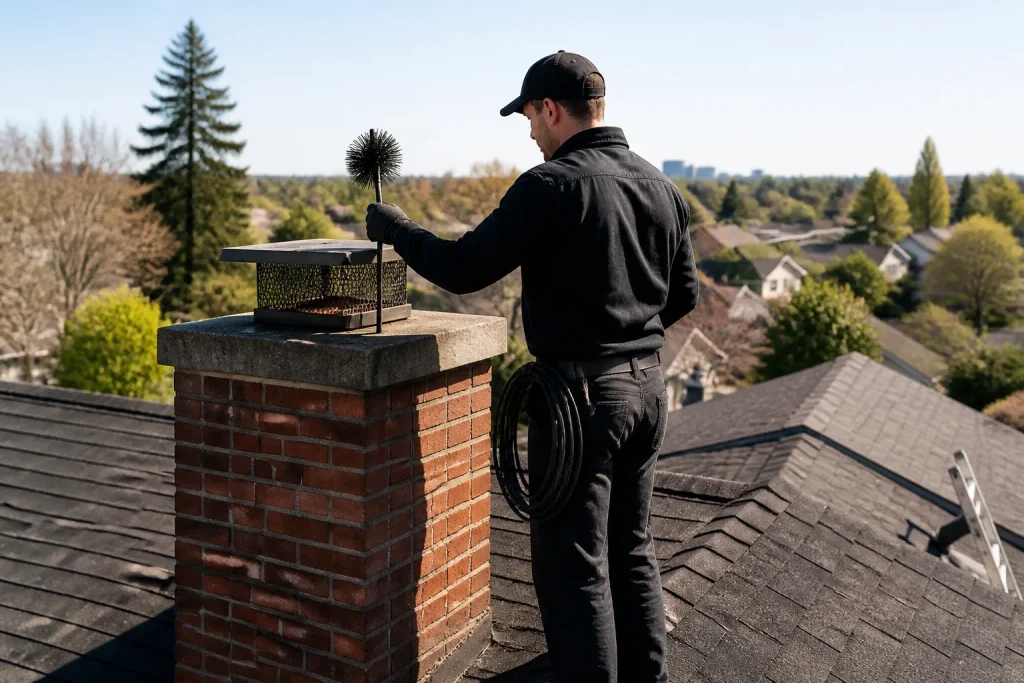
Our process after an event like this is a full camera inspection of the flue, top to bottom. You’ll see what we see: the crack, the void, the joint separation. We don’t ask you to take our word for anything, and we don’t recommend a liner or a resurfacing without showing you the footage. If the flue is sound and only the cap needs replacing, that’s what we’ll tell you. If it needs a full reline, you’ll know why and you’ll see the problem with your own eyes before you sign anything.
The Bottom Line
An emergency chimney sweep near me search in North Sacramento usually starts with fear and a half-formed plan. The plan should be simple: if there’s fire in the flue or carbon monoxide in the house, 911 first. If there’s smoke, odor, or doubt, call us second. Don’t feed the fire, don’t clean up the evidence, and don’t use the appliance again until someone with a camera has looked up the flue. Most chimney emergencies are survivable, but they get worse when homeowners try to fix them in the dark. If you’re in North Sacramento and need help, Laurel Chimney Sweep offers free estimates. Call (866) 282-7519. We answer 24/7. Fast dispatch from 7am to 7pm, Sunday through Friday.
Frequently Asked Questions
How do I know if my chimney fire is actually a chimney fire? A chimney fire roars, like a train or a jet engine, and it doesn’t stop when you walk toward the fireplace. Normal fires crackle and pop; chimney fires rumble. If you hear it, see dense black smoke, or smell something acrid, call 911 first, then call us to inspect the flue.
Should I call 911 or a chimney sweep first? If there’s active fire in the flue or a carbon monoxide alarm going off, call 911 first. If you’re seeing mild smoke spillage, smelling stale smoke, or noticing a draft problem that won’t go away, call a professional first. The sequence matters for both safety and insurance documentation.
What does a post-chimney-fire inspection actually involve? We run a camera through the flue and look for cracks, separations, and warped metal. You’ll see the footage. Depending on what we find, the fix could be a new liner, HeatShield resurfacing, or just a cap replacement. Nothing gets recommended without evidence you can see.
Can I keep using my fireplace if the fire department cleared the scene? No. The fire department’s job is to put out the fire and make sure it hasn’t spread. Their job isn’t to tell you the flue is safe. That’s our job, and you shouldn’t light another fire until the flue has been inspected. Call (866) 282-7519 and we’ll get it scheduled.
Written by the team at Laurel Chimney Sweep, serving North Sacramento since 2013.
Need Chimney Cleaning Help?
Call Laurel Chimney Sweep - licensed & insured, with free written estimates in North Sacramento.
(866) 282-7519